

How To Get Over Procrastination: 5 Evidence-Based Methods
Simple, Science-Backed Strategies to Take Action and Get Things Done.

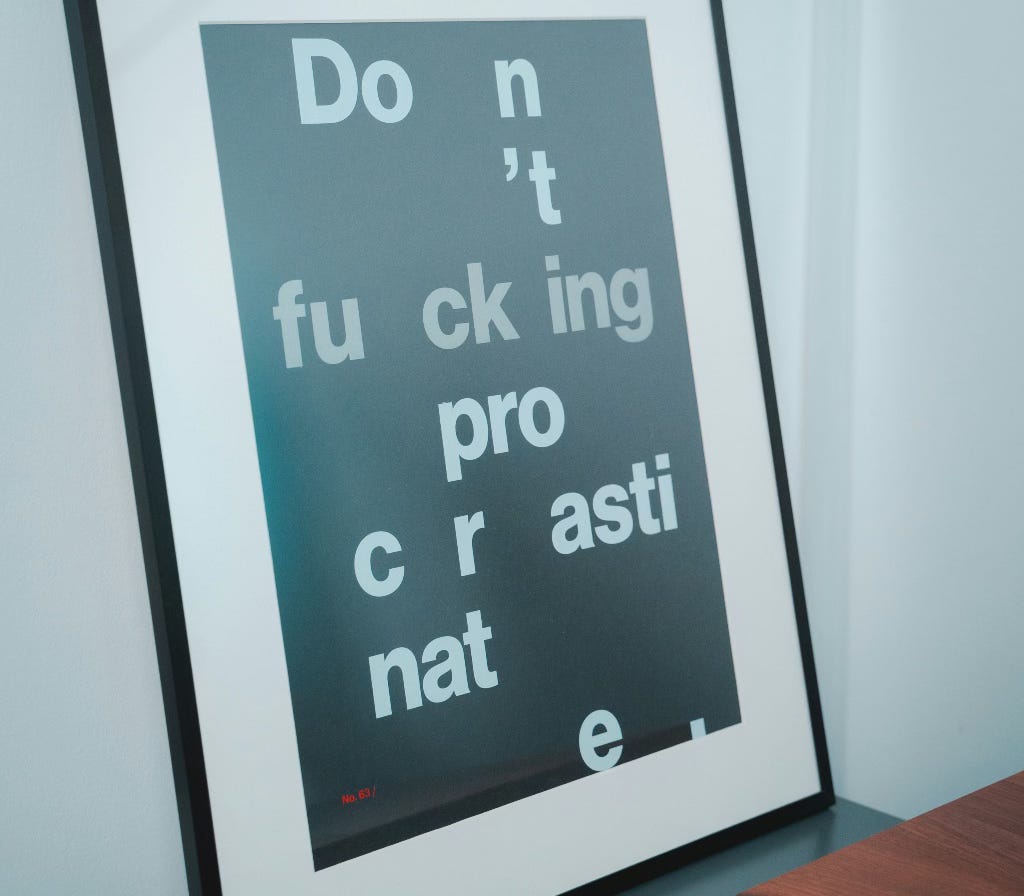
Okay, let me talk about the biggest enemy of getting things done.
The Procrastination.
We’ve all been there.
Staring at a to-do list, knowing exactly what needs to be done, yet somehow not doing it. Instead, we scroll, clean, snack, or convince ourselves that we’ll start later or wait for the perfect mood to strike.
However, that “perfect mood” never strikes, and we just keep on procrastinating and skipping the tasks.
I would say,
Procrastination is an annoying habit that makes you lazy.
And habits can be changed, right?
It’s a real psychological battle between short-term comfort and long-term goals.
You know what to do next but something is pulling you off from getting started.
That's the special power of procrastination.
In this post, let’s see five evidence-based methods that are proven to overcome procrastination.
Why have you been procrastination?
Before we begin, let’s first understand why we procrastinate in the first place. These are some of the common facts and reasons that play a major role in procrastination.
Lack of motivation or interest — The work seems boring or draining, so it’s hard to get started.
Poor focus and concentration — It’s challenging to maintain effort over a long period without getting distracted or interrupted.
Fear of failure — Anxiety that the work won’t be good enough or live up to standards.
External distractions — TV, social media, phone notifications, and noisy environments that disrupt focus.
An unproductive environment — Working in a place that feels unproductive.
Be honest. You should have gone through any of these. Don’t you?
Figuring out which of these potential issues are at play for you can help you address the problem at its source. Tackling the underlying reasons you procrastinate makes it much easier to change the behaviour.
Now, let’s see five evidence-based methods to beat procrastination.
1. Break big tasks into small steps
If it seems tooooo big, you’re likely to procrastinate.
Let me explain,
When you’re faced with a major task or project, trying to tackle the whole thing head-on can seem extremely daunting and make procrastination more likely.
A useful strategy is to break the big task down into smaller, more manageable steps. For example, instead of thinking of it as “Write a 10-page research paper”, break it down into steps like:
Choose topic
Conduct background research
Create outline
Write introduction
Write section 1
etc.
The task feels less overwhelming when split up this way. Even just accomplishing Step 1 helps get the ball rolling. Setting manageable daily goals, like “Complete outline today”, can keep you moving forward bit by bit.
Don’t forget to celebrate each small win.
Before you even know it, all those mini-wins will add up to a major accomplishment.
2. The 5-minute rule
The 5-minute rule (which I typically convert to a 2-minute rule) is a great technique for overcoming that initial resistance to starting a task.
Simply tell yourself you’ll work on the task for just 5 minutes.
Set a timer if needed. Chances are, once you get started, you’ll keep going for longer than 5 minutes without even realizing it.
The hardest part is just getting started, and once you achieve that, everything will fall into place.
This method works mainly if you have zero motivation to start the task.
Once started, you will eventually start rolling without even noticing it.
I use this method most of the time, but instead of 5 minutes, I use 2 minutes.
I keep telling myself,
‘If I’m still bored after 2 minutes, I will drop the task and get back to whatever I was doing.’
The good thing is that I just keep going after the 2-minute timer.
This works like wonder. Try it and you will never regret it.
3. Eliminate distractions
Next up is eliminating the distractions that prevent you from doing your tasks.
External distractions are one of the biggest barriers to overcoming procrastination.
When trying to focus on a task, things like phone notifications, social media, TV, music, cluttered workspaces, and other people can severely disrupt productivity.
That’s why it’s critical to eliminate potential distractions in your environment when you need to get work done.
Turn off phones, exit out of all browser windows except what you need, and find a quiet space you can dedicate solely to your task.
Try to find a spot where you can work without any distractions. Your mind should focus solely on what you’re doing.
The more distractions you can remove, the easier it will be to stay on track.
4. Find a way to make the work more fun
The next method I use to beat procrastination is changing the perception of what I’m doing.
When you procrastinate, it’s often because a task has become associated with negative emotions, such as boredom, anxiety, overwhelm, or resentment.
These feelings make it challenging to get motivated to start. That’s why it’s important to actively address the negative associations head-on.
The formula is simple: find a way to make the work more fun. Instead of seriously focusing on a task, make it more enjoyable. Everybody has different ways of having fun.
Find yours and apply it.
For example, I love listening to music while working. It gives me a fun vibe while working. However, some people might find it distracting.
So find yours.
5. Take care of your health
Last but not least. This is the most important thing that most people neglect, which is taking care of their health.
Your overall health and lifestyle habits can have a significant impact on your motivation and focus. That’s why it’s important to optimize other areas of your life to support your procrastination-busting efforts.
Let me ask you a question.
Have you ever felt frustrated or mentally exhausted for no clear reason?
I was in the same situation and couldn’t focus on anything.
I visited a doctor regarding this, and the first question she asked was ‘Do you have sufficient sleep?’
So make sure to prioritize getting 7–9 hours of quality sleep per night.
Eat a balanced, nutritious diet and stay properly hydrated. Hunger and dehydration can drain your energy, concentration, and self-control.
And don’t forget to work out your body. Joining a gym (which is the best) or just taking a short 10–15-minute walk will be enough.
Wrapping up
Procrastination is a simple thing that prevents us from doing what we have to do.
There are numerous strategies that help us prevent procrastination, but I only mentioned that I personally use.
Remember that,
The biggest win you ever make is winning against yourself.
So win against yourself, and other things will fall under your control.
Thank you so much for reading.
If you have any methods that you personally use to overcome procrastination, please comment and let me and others know about it.